
Welcome to ePathshala!
Let’s understand one of the most important and scoring chapters of Class 10 Mathematics — Quadratic Equations. This topic is essential for your board exam and forms the base for higher classes and competitive exams.
What is a Quadratic Equation?
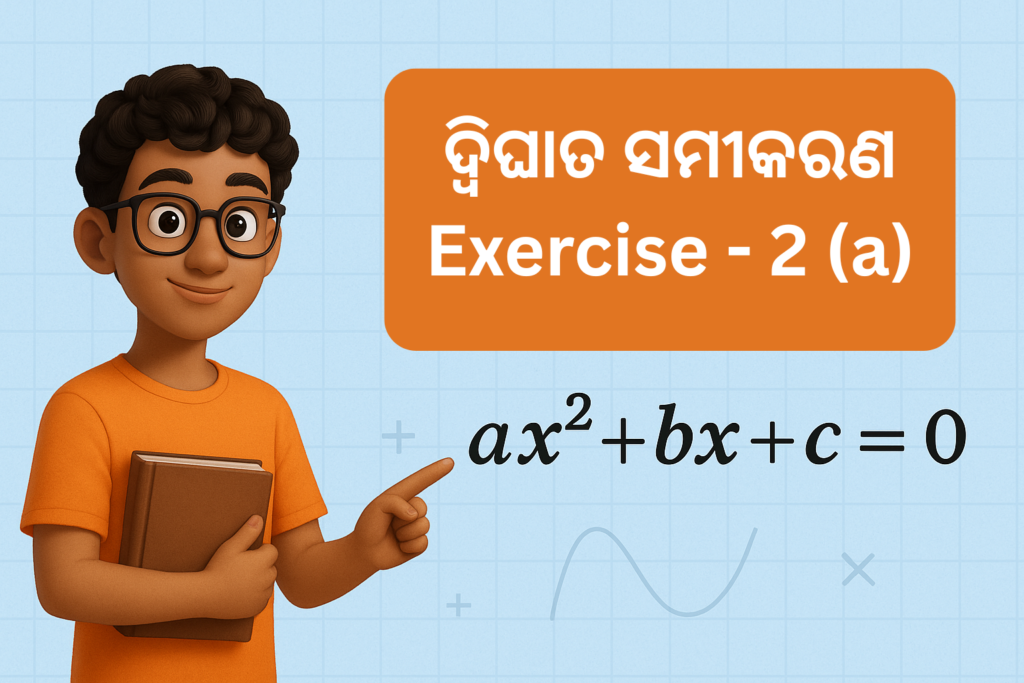
A quadratic equation is a polynomial equation of degree 2. It is written in the form:
ଏକ ଦ୍ଵିଘାତ ସମୀକରଣ ହେଉଛି ଏକ ୨ ଘାତ ପଲିନୋମିଆଲ୍ ବିଶିଷ୍ଟ ସମୀକରଣ । ଏହାକୁ ନିମ୍ନଲିଖିତ ରୂପରେ ଲେଖାଯାଏ:
ax²+bx+c=0, where:

a,b,c are real numbers and a≠0

✅ Important: If a=0, then the equation becomes linear, not quadratic
✅ ଗୁରୁତ୍ୱପୂର୍ଣ୍ଣ: ଯଦି a = 0 ହୁଏ, ତେବେ ସମୀକରଣଟି ଏକ ସରଳ ସମୀକରଣ ପାଲଟିଯାଏ, ଏହା ଆଉ ଦ୍ଵିଘାତ ହୋଇ ରହେନାହିଁ ।
🎯 Examples
- 2x²+3x+1=0
- x²−4x=0
- 3x²+7=0
Non-example:
- 5x+2=0 (ସରଳ ସମୀକରଣ Linear Equation).
How to Identify a Quadratic Equation? ଏକ ସମୀକରଣ ଦ୍ଵିଘାତ ସମୀକରଣକୁ ଚିହ୍ନିବ କିପରି?
Look for
- The highest power of the variable (x) is 2.
- ଅଜ୍ଞାତ ରାଶି (x) ର ସର୍ବାଧିକ ଘାତ ହେଉଛି ୨ ।
- The equation is equal to 0.
- ସମୀକରଣଟି ୦ (ଶୂନ) ସହିତ ସମାନ
Tip: Rearrange terms if needed. For example
ସୂଚନା: ଆବଶ୍ୟକ ପଡ଼ିଲେ ପଦଗୁଡ଼ିକୁ ପୁନର୍ବାର ସଜାନ୍ତୁ (Rearrange) ।
x(x−3)=10 becomes x²−3x−10=0
Methods to Solve a Quadratic Equation ଦ୍ଵିଘାତ ସମୀକରଣର ସମାଧାନ
1️⃣ Factorisation Method
This method splits the middle term to factorise the quadratic expression
ଏହି ପ୍ରଣାଳୀରେ ମଧ୍ୟପଦକୁ ଭାଙ୍ଗି ସମୀକରଣଟିକୁ ଦୁଇଟି ରୈଖିକ ଗୁଣନଖଣ୍ଡରେ ପରିଣତ କରାଯାଏ ।
Example:
x²- 5x + 6 = 0
=> x² -2x-3x+6 = 0
=> x(x-2) -3(x-2)=0
=>(x-2) (x-3) = 0
=> x= 2 or x =3
2️⃣ Completing the Square ପୂର୍ଣ୍ଣବର୍ଗରେ ପରିଣତ କରି
🔹 Method 1: When the Coefficient of x² is ଯେତେବେଳେ x² ର ସହଗ ୧ ହୋଇଥାଏ
This is used when the quadratic equation is already in the form:
ଏହା ସେତେବେଳେ ବ୍ୟବହୃତ ହୁଏ, ଯେତେବେଳେ ଦ୍ୱିଘାତ ସମୀକରଣଟି ଏହି ରୂପରେ ଥାଏ:

x² + bx + c = 0

✅ Steps:

1. Move the constant term c to the right side:
'c' କୁ ଡାହାଣ ପାର୍ଶ୍ୱକୁ ନେଇଯାଆନ୍ତୁ :
   x² + bx = -c

2. Take half of the coefficient of x, square it, and add to both sides:
x ର ସହଗର ଅଧା ନିଅନ୍ତୁ, ଏହାର ବର୍ଗ କରନ୍ତୁ ଏବଂ ଉଭୟ ପାର୍ଶ୍ୱରେ ଯୋଗ କରନ୍ତୁ :
   x² + bx + (b/2)² = -c + (b/2)²

3. Write the left-hand side as a perfect square:
ବାମ ପାର୍ଶ୍ୱକୁ ଏକ ପୂର୍ଣ୍ଣ ବର୍ଗ ରୂପରେ ଲେଖନ୍ତୁ :
   (x + b/2)² = RHS

4. Take square root on both sides:
ଉଭୟ ପାର୍ଶ୍ୱର ବର୍ଗମୂଳ (Square Root) ନିଅନ୍ତୁ :
   x + b/2 = ±√RHS

5. Solve for x x ପାଇଁ ସମାଧାନ କରନ୍ତୁ
🔹 Method 2: When the Coefficient of x² is NOT 1 ଯେତେବେଳେ x^2 ର ସହଗ (Coefficient) ୧ ହୋଇନଥାଏ
Used when the equation is in the form:

ax² + bx + c = 0

✅ Steps:

1. Divide the entire equation by a:
ସମ୍ପୂର୍ଣ୍ଣ ସମୀକରଣକୁ 'a' ଦ୍ୱାରା ଭାଗ କରନ୍ତୁ
   x² + (b/a)x + (c/a) = 0

2. Move the constant term to the other side:
ଧ୍ଯୁବକକୁ ଅନ୍ୟ ପାର୍ଶ୍ୱକୁ ନେଇଯାଆନ୍ତୁ
   x² + (b/a)x = -c/a

3. Take half of the coefficient of x, square it, and add to both sides
x ର ସହଗର ଅଧା ନିଅନ୍ତୁ, ଏହାର ବର୍ଗ କରନ୍ତୁ ଏବଂ ଉଭୟ ପାର୍ଶ୍ୱରେ ଯୋଗ କରନ୍ତୁ :
   x² + (b/a)x + (b/2a)² = -c/a + (b/2a)²

4. Left-hand side becomes a perfect square
ବାମ ପାର୍ଶ୍ୱଟି ଏକ ପୂର୍ଣ୍ଣ ବର୍ଗ (Perfect Square) ରେ ପରିଣତ ହୁଏ:
   (x + b/2a)² = RHS

5. Take square root on both sides and solve for x
ଉଭୟ ପାର୍ଶ୍ୱର ବର୍ଗମୂଳ (Square Root) ନିଅନ୍ତୁ ଏବଂ x ର ମୂଲ୍ୟ ବାହାର କରନ୍ତୁ :
   x = -b/2a ± √(b² - 4ac)/2a
3️⃣ Quadratic Formula
x=(−b±√b2−4ac)/2a

This is the most universal method and works for every quadratic equation.
ଏହା ହେଉଛି ସବୁଠାରୁ ସର୍ବଜନୀନ ପ୍ରଣାଳୀ ଏବଂ ଏହା ପ୍ରତ୍ୟେକ ଦ୍ଵିଘାତ ସମୀକରଣ ପାଇଁ କାମ କରେ
🔍 Discriminant – Very Important!
The discriminant (D) is the value inside the square root of the quadratic formula
ପ୍ରଭେଦକ (D) ହେଉଛି ଦ୍ଵିଘାତ ସୂତ୍ରର ବର୍ଗମୂଳ (Square root) ଭିତରେ ଥିବା ମୂଲ୍ୟ : D=b²−4ac
- If D>0: Two real and distinct roots
- If D=0: Two real and equal roots
- If D<0: No real roots (imaginary roots)
✅ Summary
| Form | ax²+bx+c=0 |
| Methods | Factorisation, Completing Square, Quadratic Formula |
| Roots | Real or Imaginary based on Discriminant |
| Use | Algebra, Physics, Business, and more |
🎥 Watch our Full Video on Quadratic Equations
📌 Quick Practice
Solve:
1. x ²−7x+10=0
2. x ²+3x−5=0

Tell us your answers in the comments below